If you’ve recently had a hearing test, the results are meant to answer a simple question: how is your hearing affecting your ability to understand the world around you?
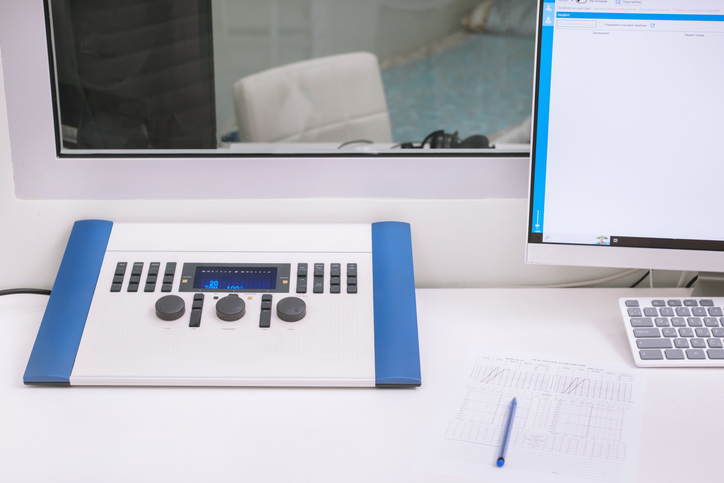
A hearing evaluation isn’t just one test. It’s a collection of tests that measure different parts of your hearing system and help explain why speech may sound muffled, why conversations in restaurants have become difficult or why you keep turning up the TV.
At The Hearing Solution, a comprehensive audiometric evaluation is designed to look beyond a basic screening. The goal is to understand not only what sounds you can hear, but how well you can make sense of them in everyday life.
According to the American Academy of Audiology’s adult diagnostic hearing evaluation standards, a comprehensive hearing evaluation typically includes pure-tone testing, speech testing and middle ear measurements to support an accurate diagnosis.1
Pure-Tone Audiometry: Measuring What You Can Hear
This is the test most people picture when they think of a hearing exam. You’ll wear headphones and respond to tones at different pitches and volumes. The results are recorded on an audiogram, which shows the quietest sounds you can hear across a range of frequencies.
For someone experiencing high-frequency hearing loss, the audiogram often reveals difficulty hearing higher-pitched sounds such as “s,” “f” and “th” sounds. That can make speech seem unclear, even when voices sound loud enough.
Things To Notice:
- Ask whether your hearing loss is concentrated in the high frequencies, low frequencies or both.
- Pay attention to whether one ear performs differently than the other.
- Ask how your audiogram relates to the communication difficulties you’ve noticed at home, work or social gatherings.
A key purpose of pure-tone testing is to determine the degree and type of hearing loss, including whether it is conductive, sensorineural or mixed.1
Speech Recognition Testing: Measuring How Well You Understand Words
Hearing sounds and understanding speech are not always the same thing. A speech recognition test measures how accurately you can repeat words presented at a comfortable listening level.
This test is often one of the most meaningful parts of an evaluation. Some people are surprised to learn they hear tones reasonably well but still struggle to understand speech, especially in noisy environments.
Things To Notice:
- Ask for your speech recognition score and what it means in practical terms.
- Find out whether background noise significantly affects your understanding.
- Listen to how your results may influence treatment recommendations.
The American Academy of Audiology recommends measuring speech recognition ability as part of a comprehensive adult hearing evaluation because it helps assess real-world communication performance.1
Tympanometry: Measuring How Your Middle Ear Functions
Not every hearing issue starts in the inner ear. Tympanometry evaluates how your eardrum responds to changes in air pressure and helps identify problems involving the middle ear.
Sometimes hearing difficulties are linked to fluid behind the eardrum, pressure abnormalities or other middle-ear concerns. This test helps your audiologist determine whether those factors are contributing to your symptoms.
Things To Notice:
- Ask whether your middle ear function appears normal.
- Find out if pressure, fluid or eardrum movement may be affecting your hearing.
- Ask whether additional medical evaluation is recommended.
What Does A Hearing Loss “Slope” Mean?
A sloping hearing loss pattern usually means hearing becomes poorer as pitch increases. This is one of the most common patterns seen in age-related hearing loss and often affects the clarity of speech more than overall volume.
Can Hearing Test Results Change Over Time?
Yes. Hearing can change gradually due to aging, noise exposure, certain medical conditions and other factors, which is why periodic monitoring is often recommended.
Understanding The Whole Picture
No single number on your hearing test tells your entire story. Your listening goals, lifestyle and communication challenges matter just as much as the test results themselves.
Whether you live in Sacramento, elsewhere in California’s Central Valley or are simply looking for clearer answers about your hearing, a professional evaluation can provide valuable context. If you’ve noticed changes in how you hear conversations, understand speech or engage with family and friends, consider scheduling a comprehensive audiometric evaluation with The Hearing Solution. Understanding your results is often the first step toward hearing with greater confidence again.
Sources
1 American Academy of Audiology. “Comprehensive Diagnostic Hearing Evaluation Standard for Adult Patients.” https://www.audiologystandards.org/standards/publications/APSO_S3.1_Adult_Dx_Hearing_20231205.pdf